
Against forgetting: The Ukrainian Experience of Displacement in Postwar Poland on the Example of the Nadsanie Region
Against forgetting: The Ukrainian Experience of Displacement in Postwar Poland on the Example of the Nadsanie Region
Report
This youth exchange took place from September 4–14, 2025, in Kraków, Kowalówka, and Przemyśl, Poland. 27 participants from seven countries, mostly university students and young professionals aged 19–24, joined the program to explore one example of war crimes. The thematic focus was on the Ukrainians who had been displaced from their homeland after World War 2 by the Soviet regimes in Poland and Ukraine, on the consequences of this crime against humanity, and on the question how their cultural heritage persists until today. The exchange aimed to encourage intercultural dialogue, critical reflection on history, discussion about common European memory, and active remembrance of postwar displacement of Ukrainians.
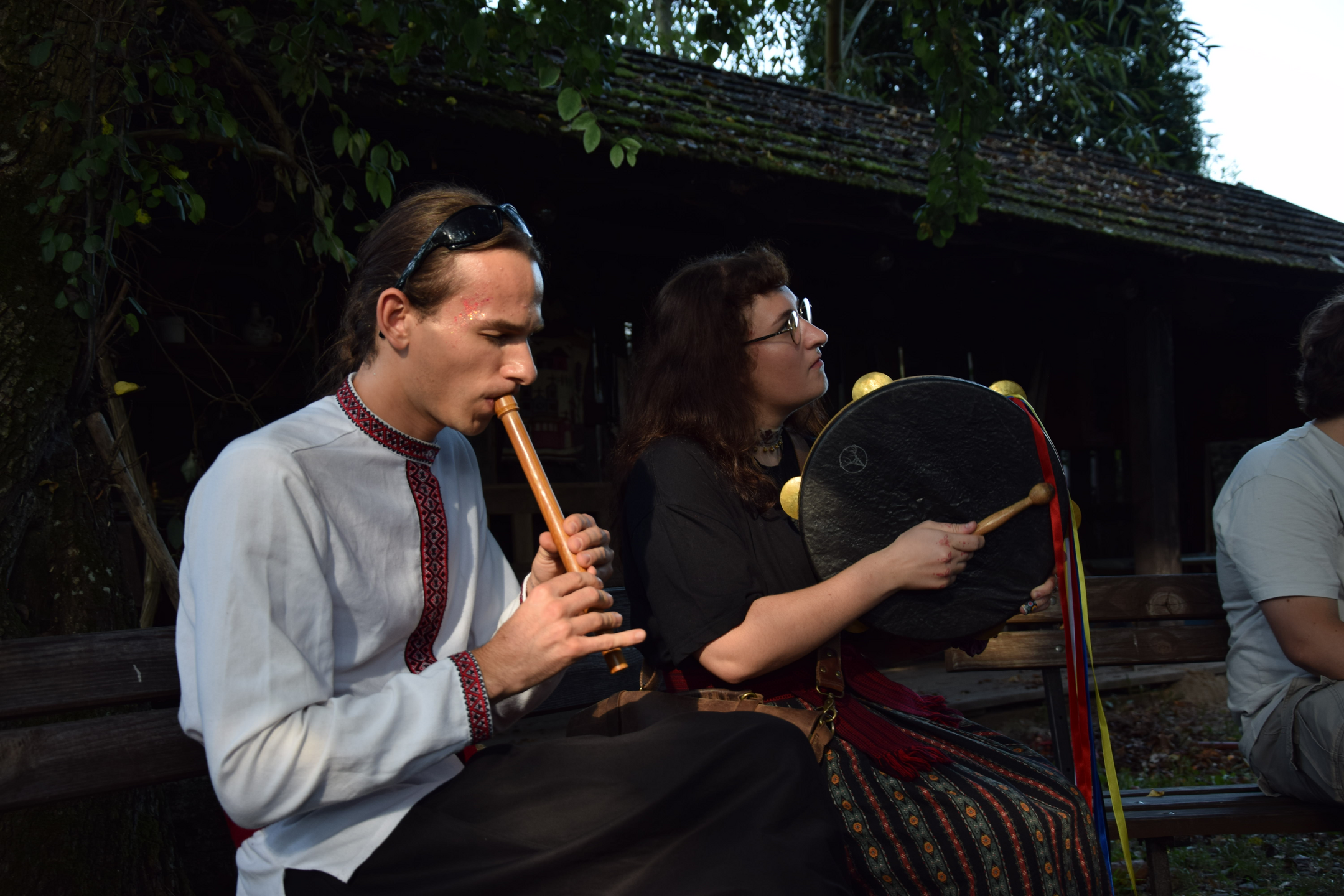
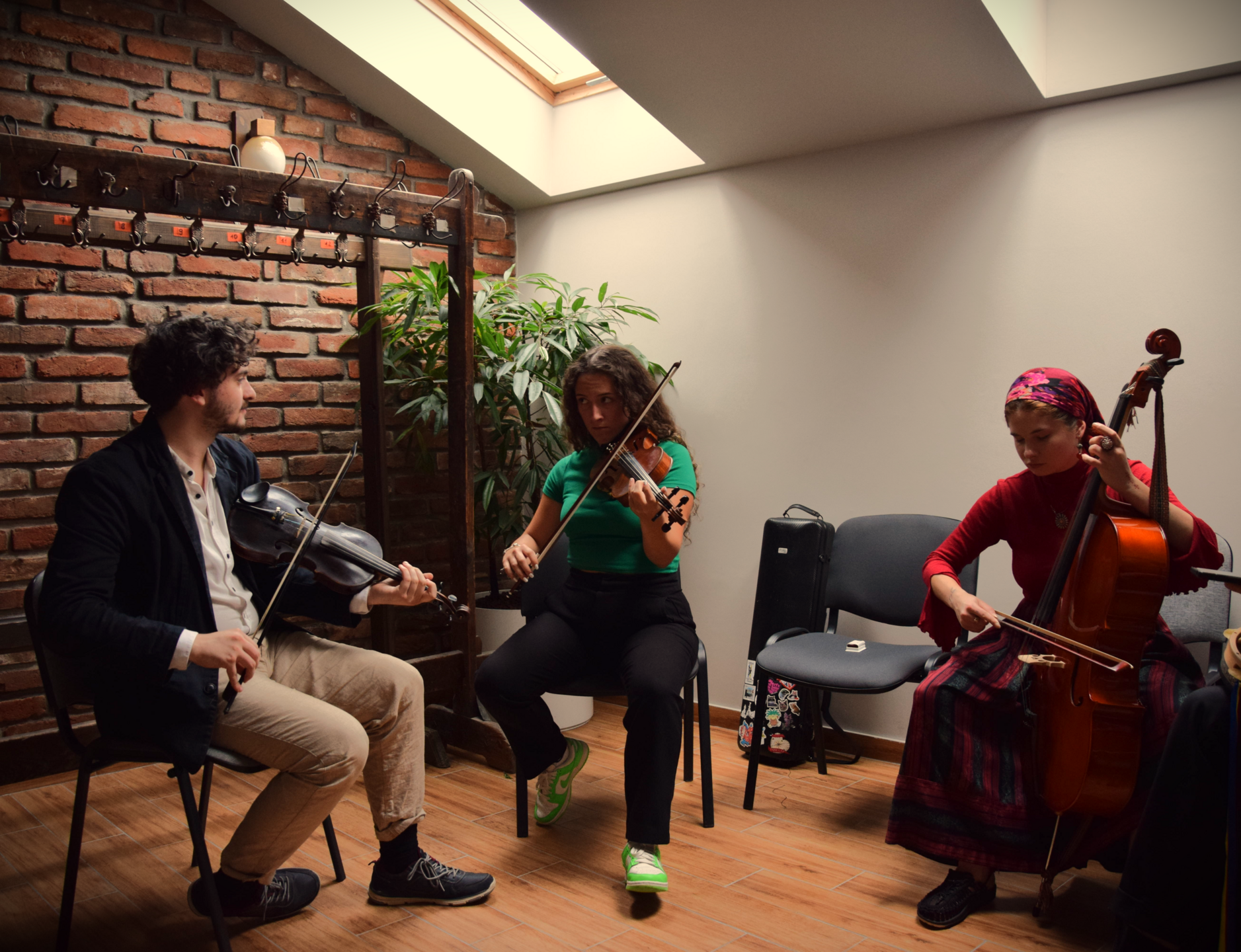
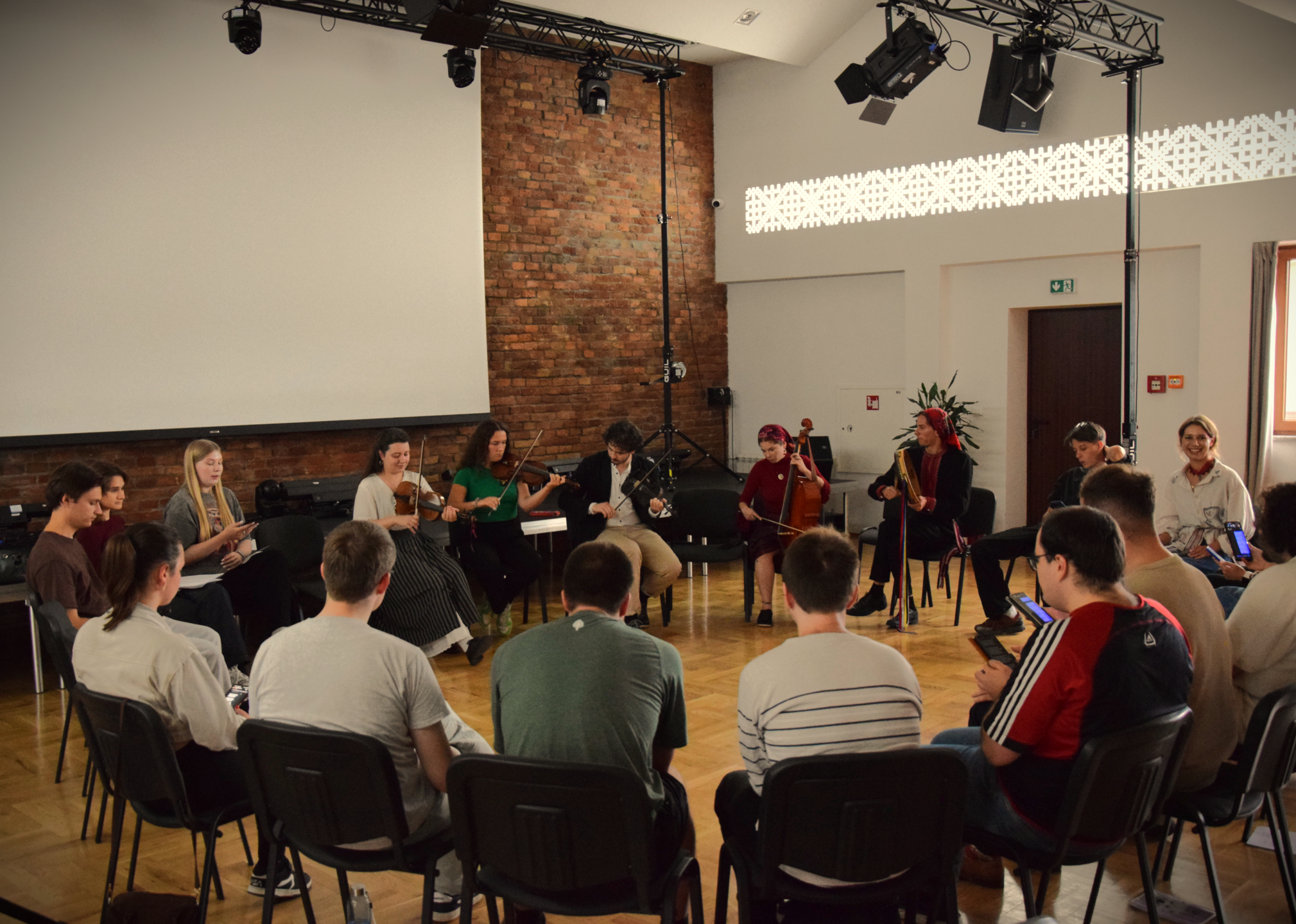
We combined historical learning with practical skills. Participants practiced conducting interviews, using recording equipment, and writing texts based on academic sources. They also trained traditional singing and dancing, and those who brought instruments learned to play local music. This mix of academic and cultural activities helped participants strengthen their research skills while connecting with lived heritage – cultural traditions that are passed down through practice and experience.
Resources on the topic were prepared by the participants before their arrival, and were discussed during a lecture led by expert Dr. Yuliia Buyskych in Kraków. Methodology workshops with Martin Neumeister and Nina Lewandowska introduced participants to note-taking, interviewing techniques, and the use of recording equipment.
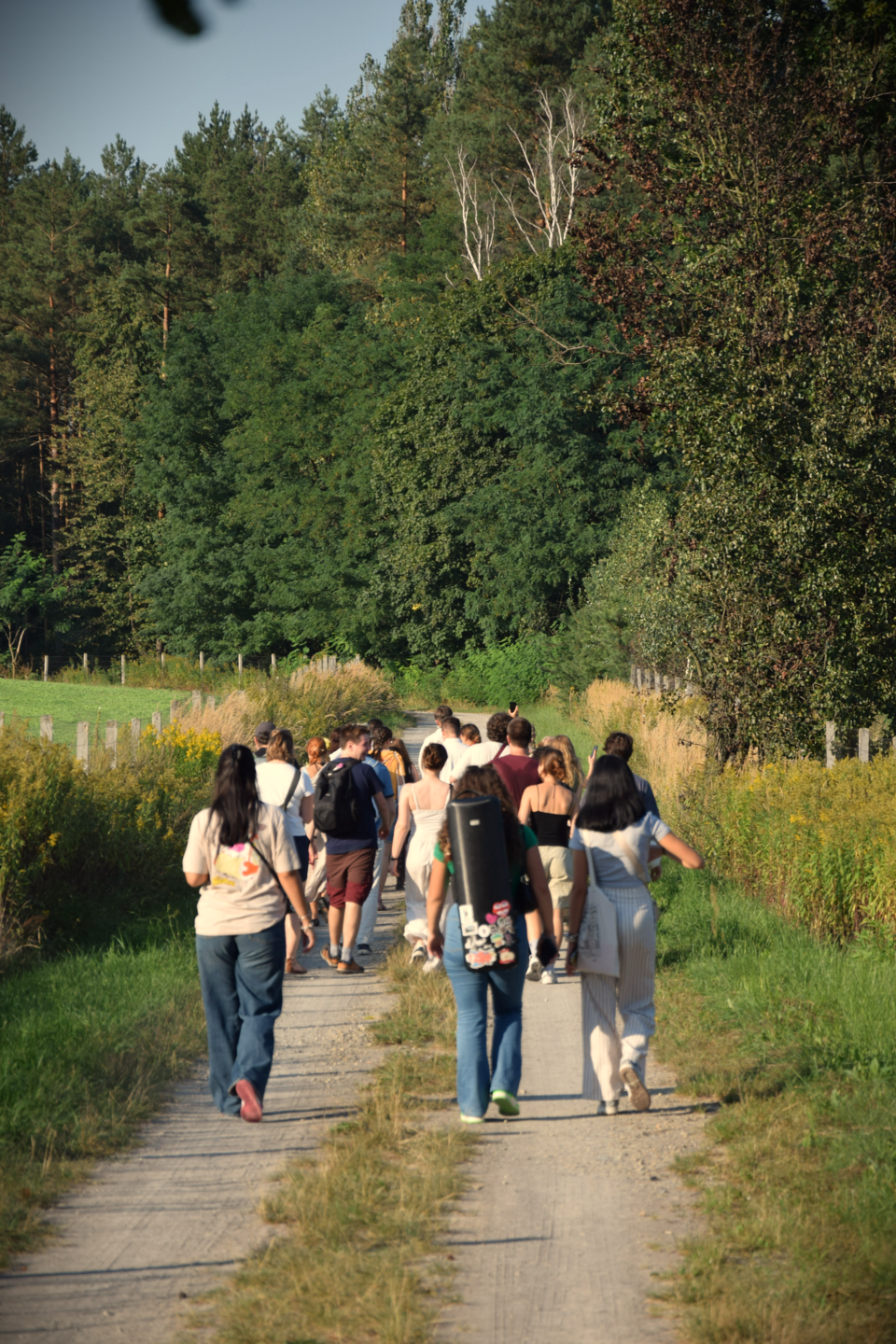
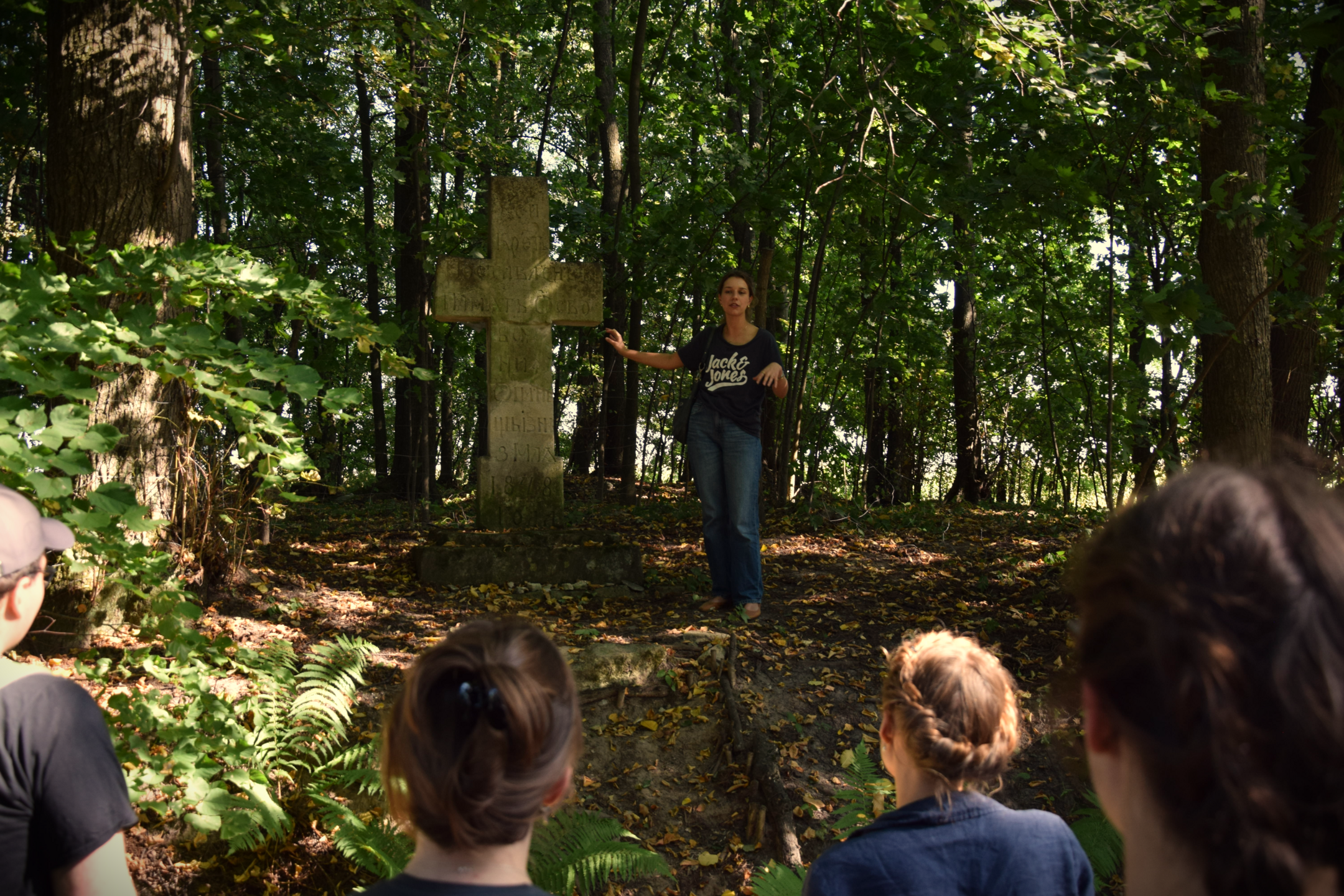
The first two days in Kraków were spent on arrivals, introductions, and preparatory sessions. The next three days in Kowalówka focused on exploring the northern part of the Nadsanie region. Daily singing workshops prepared participants for the intensive program in Przemyśl. Visits to Gorajec, Radruż, and Podemszczyzna offered insights into Ukrainian material heritage and the difficult history of displacement. A visit to the Bełżec Holocaust Memorial also allowed participants to reflect on the Jewish communities that once lived in the region. Throughout the exchange, guided tours, expert presentations, and site visits deepened participants’ knowledge. Regular reflection sessions encouraged intercultural dialogue and critical engagement with history.
In Przemyśl, four days were dedicated to music workshops at the Ukrainian House, led by Maksym Nakonieczny and Marta Bodnar, who specialize in Nadsanie musical traditions and represent descendants of the victims of displacement. Participants also attended a panel discussion on the role of remembrance in contemporary society, organized by the POLIN Museum, Utøya Museum, and Maidan Museum. An art workshop introduced the traditional wax-resist egg-painting technique using Nadsanie patterns. The final days in Przemyśl were dedicated to the group work on finalizing the podcast and exhibition, as well as to the evaluation.
The exchange concluded back in Kraków, where participants joined two guided city walks, visited the National Museum to explore 20th- and 21st-century Polish art, and attended a screening of the documentary War Is Not Over (https://www.youtube.com/watch?v=zgjqsrFvfPs), followed by a discussion on the ongoing Russian war against Ukraine.
Participants created the Instagram account (https://www.instagram.com/nadsanie/) as a journal of their experience, which was widely shared by partners and participants.
The exchange achieved notable outcomes. Participants developed stronger intercultural communication skills, gained first-hand understanding of this part of Europe, and contributed to preserving lived heritage through songs and crafts. The podcast, exhibition, and social media journal ensure that the project’s impact continues beyond the exchange itself.
Above all, the program fostered a culture of active remembrance. By linking historical displacement with contemporary experiences of war and migration, it encouraged participants to see remembrance as an active responsibility. Participants left with new skills, lasting connections, and a commitment to preserving and sharing the memory of the displaced inhabitants of Nadsanie region.